
Nowadays, having clean indoor air is essential for a healthy home and is not a luxury. The correct purifier can significantly alter your breathing, sleep, concentration, and even the frequency with which you take antihistamines due to a variety of pollutants, including dust, pet dander, urban pollution, wildfire smoke, and seasonal allergens. However, picking the “best” model can feel like chasing a dream with hundreds of models and dozens of companies.
This 2025 guide helps you choose a purifier that fits your priorities, budget, and room size by breaking out six of the most talked-about brands: Dyson, Shark, Winix, Blueair, Honeywell, and Sans. You’ll discover along the road what is primarily marketing jargon and what matters most (CADR, filter type, noise, and operational cost).
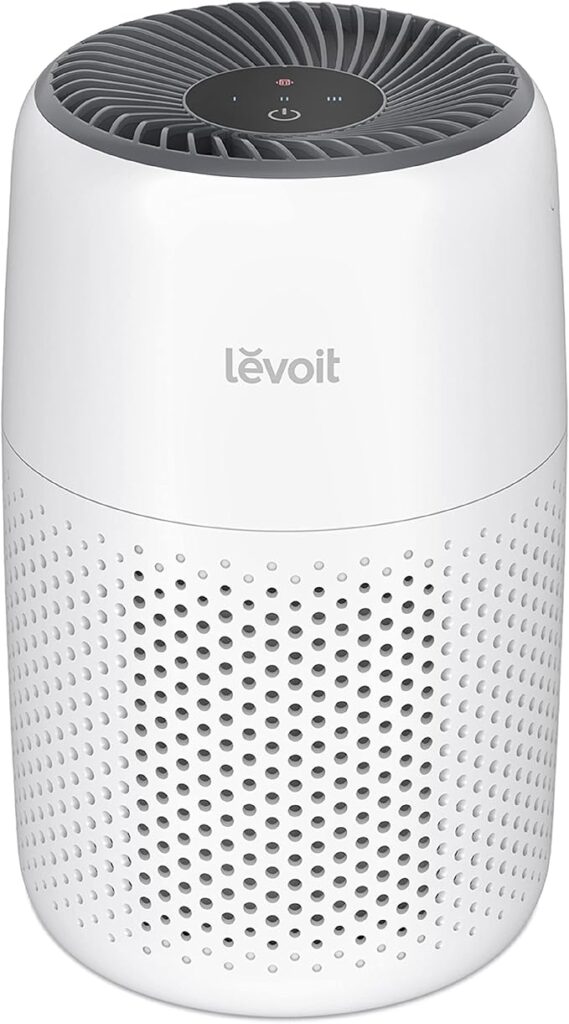
LEVOIT Air Purifiers for Bedroom Dorm, 3-in-1 Filter Cleaner with Fragrance Sponge for Better Sleep, Filters Smoke, Allergies, Pet Dander, Odor, Dust, Office, Desktop, Core Mini-P, White
| Color | White |
| Brand | LEVOIT |
| Product Dimensions | 6.5″D x 6.5″W x 10.4″H |
| Floor Area | 255 Square Feet |
| Specification Met | ETL Certified |
Table of Contents
The Functions of Air Purifiers (in 60 seconds)
The pre-filter in the majority of contemporary purifiers captures hair and big dust particles, followed by a HEPA or HEPA-grade filter that captures smaller particles including dust, smoke, and pollen, and frequently an activated carbon filter that absorbs smells and volatile organic compounds, or VOCs. Some companies use additional technology, such as UV-C, plasma/ionization, or photocatalysis, as a last step to eliminate specific contaminants or microorganisms.
Important details you’ll continue to see:
- The unit’s CADR (Clean Air Delivery Rate) indicates how much clean air it produces; the higher the better. Usually displayed for dust, smoke, and pollen.
- The square footage that a purifier can manage for a desired air change per hour (ACH) is known as room size / ACH. The optimum time for smoke and allergy relief is between 4 and 5 ACH.
- Type of filter: brand tech (e.g., HEPASilent) or True HEPA/HEPA-13.
- Energy and noise levels are crucial for bedrooms and round-the-clock use.
- Filter lifespan and cost: An unanticipated, continuous expense you should budget for.
Snapshots of the Brand (TL;DR)
- Dyson: High-end style and large-room efficiency; sophisticated models target formaldehyde with no noise. Expensive, but loaded with sensors, app control, and ingenious ventilation.
- Shark: Excellent for medium-to-large rooms without boutique pricing; strong value with Clean Sense IQ auto-mode and high claimed capture rates.
- Winix is the crowd’s favorite “best value” option, notably the 5500-2, which has PlasmaWave, a washable carbon filter, and real-world performance. Excellent option if you’re on a tight budget and want verified CADR.
- The new 211i Max from Blueair is the preferred option for extra-large areas with smart controls because of its minimalist design, HEPASilent technology, and room-filling airflow.
- Honeywell: If you appreciate simplicity, these workhorse machines (like the HPA300) with excellent CADR, simple controls, and wide availability are a wise investment for large spaces.
Fresh from the House - Sans: a solid feature set for the price; “Medical-grade” HEPA-13 + UV-C; a clean interface for the wellness-focused buyer.
Dyson: High-End Sensors and Silent Power
The focus of Dyson’s 2025 lineup is on high-coverage, low-noise devices with stunning industrial design. Their flagship product for large spaces is the Purifier Big+Quiet Formaldehyde (BP03/BP06), which is designed to purify extremely large environments while reducing noise levels. With HEPA-grade filtration and targeted removal of formaldehyde, a persistent volatile organic compound (VOC) emitted by floors, paintings, and furniture, its claims coverage up to 100 m² (about 1,000 ft²).This category-leader is appealing if you have a sensitive nose or want a purifier that blends in with your living room while still producing a lot of air.
Ideal for: Open-plan areas, vast rooms, and design-conscious homes; additionally, it is ideal for consumers who prefer whisper-quiet operation at lower speeds and formaldehyde sensing/removal.
Think about this if: You’re prepared to spend more for acoustics, sensors, and construction quality.
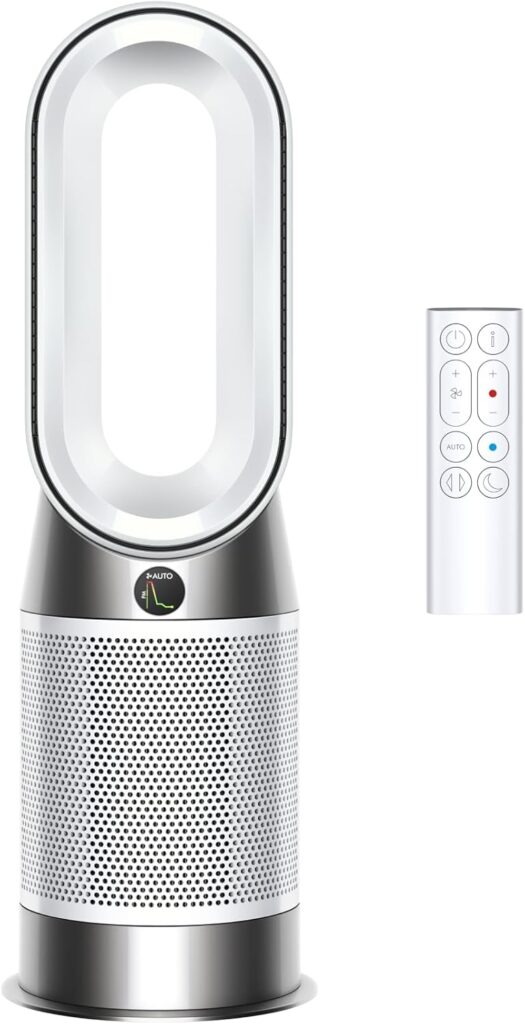
Dyson Purifier Hot+Cool™ Gen1 HP10 – Purifying Fan Heater (White)
| Color | White |
| Brand | Dyson |
| Product Dimensions | 9.84″D x 9.84″W x 30.2″H |
| Floor Area | 73 Square Feet |
| Noise Level | 59.8 dB |
Shark: Big-Room Options, Feature-Rich Value
It is known for providing you with a lot of purification for your money. True HEPA, Clean Sense IQ (which automatically adjusts fan speed to air quality), and strong claimed coverage—often quoted from 500 ft² up into the 1,000–1,200 ft² range on higher models—are features of models like the HP102 (small/medium rooms) and the larger HP2xx/HP23x consoles. User experience is excellent if you want set-and-forget purification with readable air quality readouts on the screen.
Ideal for: Apartments to large family rooms, buyers juggling coverage and cost, and anyone looking for a practical auto mode that reacts fast to smoke, cooking, or pets.
Think about this if: You want simple HEPA filters without fancy features like formaldehyde sensors, and you want to pay less for filters than ultra-premium brands.
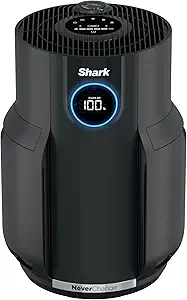
Shark Air Purifiers for Home Large Room with NeverChange Air Filter, 5 Year HEPA Filter, Covers 650 Sq. ft, Odor Neutralizer and Clean Sense Technology, Removes 99.98% of Dust & Allergens, HP152
| Color | Charcoal (650 sq. ft) |
| Product Dimensions | 10.47″D x 9.33″W x 14.9″H |
| Floor Area | 650 Square Feet |
| Specification Met | AHAM Certified |
Winix: Demonstrated Effectiveness on a Budget
With features like true HEPA, a washable carbon filter, PlasmaWave (an ionization stage you can turn off), and genuine CADR muscle, the Winix 5500‑2 has been on “best value” lists for years. Strong smoke/dust/pollen CADR (around 232–246 CFM) is still detected by third-party testers, indicating that it works for about 360 ft² at about 4.8 ACH.This is a “buy it and breathe” option if you want unquestionable value for your money and don’t require an app or a fancy design.
Ideal for: Living rooms, bedrooms, and home offices where you desire significant cleaning power for less than $250 (the normal street price), and reduced recurring expenses because of washable carbon.
Think about if you can live with a simpler design and fewer sophisticated functions.
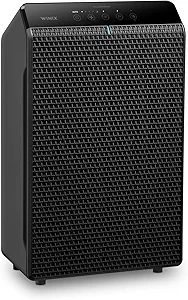
WINIX 5520 Air Purifier for Home Large Room Up to 1882 Ft² in 1 Hr With Air Quality Monitor, True HEPA, High Deodorization Carbon Filter and Auto Mode, Captures Pet Allergies, Smoke, Dust.
| Color | Black |
| Product Dimensions | 8.3″D x 13.6″W x 22.7″H |
| Floor Area | 1881 Square Feet |
| Specification Met | AHAM Certified, Energy Star Certified, UL Certified |
Blueair: HEPA-Silent + Elegant Large Rooms
The main attraction of Blueair is its HEPASilent technology, which uses mechanical and electrostatic filtration to lower resistance and noise levels at a specific airflow. The brand’s design language is sleek and contemporary. For extra-large spaces, the Blue Pure 211i Max is exceptional because it combines high airflow with intelligent controls and an enhanced filtration system.Blueair is a terrific lane if you want something that looks amazing, pushes masses of air silently, and works with an app.
Ideal for: Open living areas that require low noise levels, high CADR, and a simple form factor that complements the decor.
Think about it if: You want app-connected scheduling and air-quality analytics, and you’re comfortable with Blueair’s filter pricing.
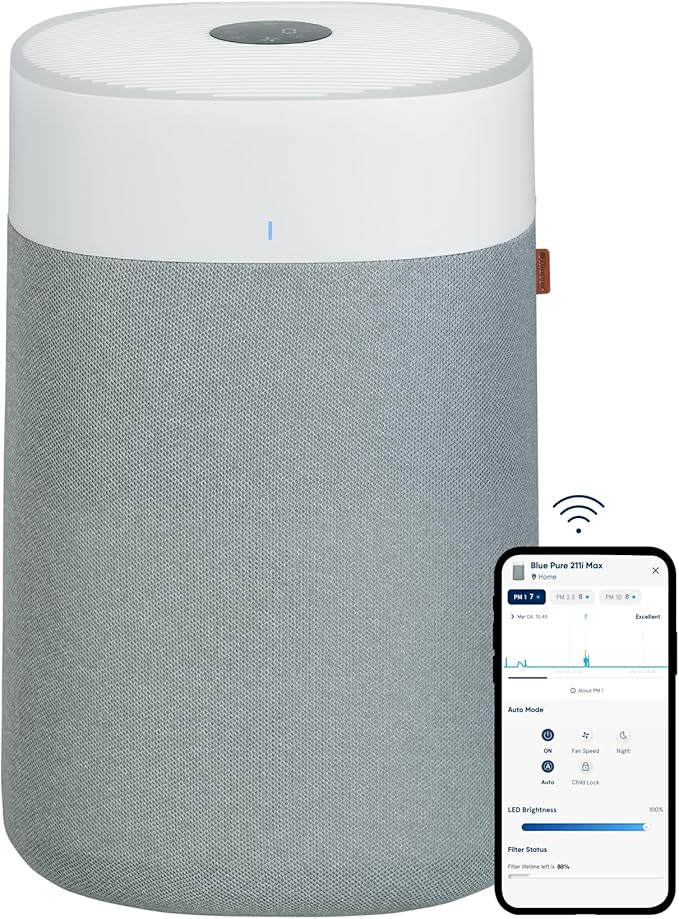
BLUEAIR Air Purifiers for Large Rooms, Cleans 3,048 Sqft In One Hour, HEPASilent Smart Air Cleaner For Home, Pets, Allergies, Virus, Dust, Mold, Smoke – Blue Pure 211i Max
| Color | Grey and White |
| Product Dimensions | 14.4″D x 14.4″W x 22.7″H |
| Floor Area | 3048 Square Feet |
| Specification Met | AHAM Certified |
High CADR Workhorses: Honeywell
For those who value unadulterated cleaning power and straightforward controls, Honeywell’s HPA series is a favorite. The HPA300 is rated for large rooms (~465 ft² at ~4.8 ACH) and has substantial CADR figures (e.g., Smoke ~300 CFM; Dust ~320 CFM). Although it lacks many intelligent features and isn’t the quietest at maximum speed, if you want dependable,Honeywell provides readily available filters and a straightforward purifier that moves air quickly.
Ideal for: People with allergies who don’t require app control and want the most turnover in medium-to-large spaces.
Think about this if: You don’t mind a traditional, functional look and a little louder unit on “Turbo.”
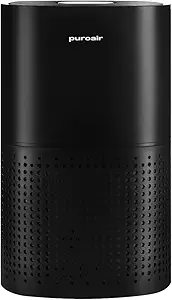
PuroAir 240 HEPA Air Purifier for Home Large Rooms – Covers Up To 1,000 Sq Ft – Filters Up To 99.9% of Pollutants, Smoke, Pollen, Dust – Quiet HEPA Air Filter – Air Purifiers for Bedroom
| Color | Black |
| Brand | PuroAir |
| Product Dimensions | 8.5″D x 8.5″W x 14.25″H |
| Floor Area | 1000 Square Feet |
| Specification Met | ETL Certified, CARB Certified, UL Certified, ISO, and Energy Star Certified |
Sans: Health-Centered HEPA-13 + UV-C
HEPA-13, activated carbon, and an inbuilt UV-C stage, all housed in a contemporary chassis with SmartPure air-quality readouts, give Sans a clean, wellness-center vibe. Sans is an appealing choice for bedrooms and living areas if you enjoy the certainty of many stages (including UV-C) and are drawn to the thought of medical-grade filtration. The manufacturer offers a simple filter change cadence (~2,200 hours per filter set) and advertises removal capability down to 0.1 microns.
Ideal for: Health-conscious consumers seeking HEPA-13 + UV-C, easy-to-use controls, and a tidy appearance.
Sans stresses a balanced, wellness-oriented spec sheet, so think about whether you want the most comprehensive third-party testing data or the highest CADR values.
Which Brand Is Best for Which Room, Side by Side?
little spaces (≤200–250 ft²)
- Top priorities: low energy consumption, quiet, and compact
- Sans (balanced features), Winix 5500‑2 on low/medium, and Shark HP102 (auto mode, compact) are good fits.
Rooms of moderate size (250–400 ft2)
- Top priorities: sleep-friendly noise and good CADR
- Good fits are the Blueair 311/211 family (silent airflow), Honeywell HPA300 (muscle), and Winix 5500‑2 (value king).
Large/XL spaces (400–1,000+ square feet)
- High CADR without jet-engine noise is the main objective.
- Shark console versions (value with big coverage), Dyson Big+silent Formaldehyde (premium, silent), and Blueair 211i Max (extra-large) are good fits.
Purchasing Guide: What Really Counts
1) Properly size it (ACH first, CADR second).
Start with the area of the room and the height of the ceiling. For optimal smoke and allergy reduction, strive for 4–5 air changes per hour (ACH). To find the CADR you require, work backward. To put it simply, a purifier that lists a smoke CADR of about 300 CFM can easily handle 450–500 ft² at 4-5 ACH.
2) Filter stages and quality
For particles, “True HEPA” (also known as HEPA-13) is the top standard. Invest in a charcoal filter if you are concerned about VOCs and smells. If they address your issues, extras like UV-C (Sans) or formaldehyde sensors (Dyson) bring targeted benefits.
3) The profile of noise
On low, most purifiers are silent, but at medium or high, the difference becomes noticeable. Blueair and Dyson prioritize low turbulence designs;Although they can be more audible at full tilt, Winix and Shark are valuable. Prioritize a unit for bedrooms that maintains the necessary airflow at less than 35 dB (brand specifications and reviews are helpful in this regard).
4) Filter availability and cost
A purifier is actually a subscription service. Examine the cost, longevity, and availability of filters. Honeywell and Blueair have extensive distribution for replacements, while Winix’s washable carbon helps reduce operating expenses.
5) Smart features (not necessary, but great to have)
For daily ease, auto mode, air-quality readouts, app management, and scheduling are excellent. However, if money is scarce, start with CADR and filter quality. (The Blueair app and Shark’s Clean Sense IQ are also great quality-of-life add-ons.)
Real-World Situations (Select Your Combatant)
“When I cook, my open-plan living room becomes smoky.”
- Choose between the Dyson Big+Quiet and the Blueair 211i Max; both move a lot of air silently and react fast to spikes.
- Why? Because auto mode and high airflow reduce residual cooking and smoke smells.
“I need relief in the bedroom because I have a dust and pollen allergy.”
- Choose either the Honeywell HPA300 or the Winix 5500-2.
- Why: Winix’s washable carbon helps if you’re also sensitive to smells; it has a high CADR and real HEPA performance.
“Our pets have a litter box, and it’s powerful.”
- Choose from Blueair (strong air changes + carbon) or Shark (with odor tech).
- Why: Robust carbon and a strong auto mode help reduce odors and dander.
“The smell of the new furniture is giving me headaches.”
- Choose a device with improved VOC/formaldehyde focus or the Dyson Big+Quiet Formaldehyde.
- Why: Strong circulation combined with formaldehyde-specific detection and filtering.
“I want a wellness option that is all-inclusive.”
- Choose: Sans (UV-C + carbon + HEPA-13).
- Why: A multi-phase strategy with a straightforward user interface and real-time AQI presentation.
Sans
Brand-specific Pros and Cons
Dyson
- Advantages include formaldehyde targeting, sophisticated sensors, low noise big-room performance, excellent engineering, and a premium software.
- Cons: Expensive; filter replacements may be more expensive.
Shark
- Advantages: Fair cost, a variety of room coverage options, and an excellent auto mode (Clean Sense IQ).
- Cons: Noise increases on higher gears; fewer boutique features.
Winix
- Advantages: Excellent value for the pricing, washable carbon, powerful CADR, and optional PlasmaWave.
- Cons: Simpler appearance and less app/smart functions.
Blue Air
- Advantages include HEPASilent technology, a streamlined design, powerful smart features on the i-series, and high airflow with minimal noise.
- Cons: Filters can cost more; pick the appropriate size to prevent them from operating at maximum capacity all the time.
The Honeywell
- Pros: Easy filter available, simple and dependable, large CADR numbers.
- Cons: Louder at maximum speed; no app on vintage models.
Sans
- Advantages: transparent AQI display, wellness-focused design, HEPA-13 + carbon + UV-C.
- Cons: Less third-party testing than the titans; smaller ecosystem.
Conclusion: In 2025, which air purifier is the best option?
Your needs, financial situation, and preferred way of life will all play a major role in your 2025 air purifier selection. Although each of the six brands—, Blueair, Honeywell, and Sans—has shown itself to be dependable in various contexts, let’s review their advantages to assist you in making an informed choice.
- For anyone who want more than simply an air purifier, Dyson is the best option. In addition to being a heater and fan, it also has future app controls. It is fashionable, strong, and ideal for contemporary homes.
- Shark: A great combination of performance and price. Medium-sized spaces and those looking for high filtration without going over budget may benefit greatly from shark air purifiers.
- Winix: A wise option for consumers seeking the best possible value.It is perfect for bedrooms and small flats because of its sophisticated sensors, silent operation, and PlasmaWave technology.
- Blueair: Blueair purifiers are the best option if you value extremely silent operation and wide area coverage. They are made for those who want open living areas with pure air and no noise pollution.
- Honeywell Honeywell, a well-known brand in the industry, is renowned for its dependability and durability. For houses that require continuous dust and allergy cleaning, its purifiers are simple, effective, and great.
- Sans: A relatively new company, Sans provides medical-grade filtration together with a stylish look. It’s ideal for people who desire high-end air purification with contemporary style.
To put it briefly:
- Dyson is the best for design and multipurpose use.
- Shark is the Best Low-Cost Choice.
- Winix has the best smart features.
- Blueair is ideal for large rooms.
- The most dependable brand is Honeywell.
- The Best High-End & Contemporary Option: Sans
Professional Advice on Making the Most of Your Air Purifier
Purchasing a high-quality air purifier is just half the fight; proper use guarantees optimal effectiveness. The following advice will be helpful to you:
- Proper Placement: Steer clear of placing your purifier behind furniture or in a corner. For improved ventilation, it ought to be in an open space.
- Run it all the time. The majority of purifiers are made to operate constantly. To save energy, put them in auto or low mode.
- A clogged filter will not function properly, therefore change your filters on time. When replacing filters, according to the manufacturer’s guidelines.
- Clean Environments Around Us Allergens, dust, and pet hair build up on surfaces. Frequent cleaning improves the purifier’s performance.
- Fit the Purifier to the Size of the Room: A little purifier won’t work well in a large space. Verify CADR ratings at all times.
- Track Air Quality: A lot of contemporary purifiers have sensors; you may monitor the air quality in your house using the app or built-in display.
- Use during Allergy Season: When pollen levels are high in the spring and fall, purifiers should be run more regularly for people who have allergies.
The Importance of Air Purifiers in 2025
In 2025, the need for air purifiers is expected to soar because of:
- Increasing Pollution Levels: Air pollution in urban areas is still on the rise.
- Health Issues: Allergies and respiratory diseases are more prevalent than ever.
- Work from Home Way of Life Because people are spending more time indoors, indoor air quality is becoming increasingly important.
- Wildfires and environmental factors: Poor outdoor air that readily permeates inside spaces is a result of seasonal wildfires and global climate change.
Air purifiers are becoming essential for leading a healthy lifestyle and are no longer considered a luxury. These gadgets are especially helpful for families with kids, senior citizens, or people who have asthma.
In conclusion
There are many options available on the market for air purifiers in 2025. Sans appeals to those looking for high-end design with medical-grade performance, Blueair dominates silent efficiency, Shark wins on price, Winix strikes a mix between features and value, and Dyson dazzles with innovation.
Your lifestyle requirements, space size, and budget will all influence your ideal choice. Regardless of the option you select, purchasing an air purifier guarantees improved comfort, health, and peace of mind in today’s world of rising pollution.